Retired Educational Psychologist With 16 Years In The Classroom Reveals Why "Stubborn" Children Are Almost Never Stubborn -- And The Simple Old-School Method That Turns School Complaints Into School Progress (Without the Cane, Shouting, or Extra Lesson Teachers)
Even When Lesson Teachers, Changing Schools, and the Cane Have All Failed You

When the school calls, your stomach drops before you even pick up.
You already know what they are going to say.
"He is not paying attention."
"She is disrupting the class again."
"Nothing is changing."
You hang up. Your hands are shaking.
You tell yourself, "He is just a boy. Boys are like that. He will settle down."
But this is not the first call.
It is the third this term.
Or the fourth.
You stopped counting after the second school.
At the school gate, you watch other mothers laughing and chatting.
Their children carry their bags quietly.
Your child is the one the teacher walks to the gate personally. With a look.
You smile and say "thank you, Ma." Your face is burning.
You hold his hand and walk to the car before anyone notices.
At home, it does not stop.
Homework that should take 30 minutes takes 3 hours.
Tears. Shouting. The pencil thrown across the table. The same page started four times.
Your jaw is clenched so tight your teeth hurt.
And you can see it in his eyes.
He is starting to believe what they say about him.
He is starting to believe he is the problem.
Your mother-in-law says he needs a proper beating.
Your husband says change the school.
Your pastor says bring him for prayers.
Everyone has an opinion. Nobody has an answer.
And late at night, when the children are finally asleep...
You lie in the dark, staring at his school bag hanging on the chair.
And the questions come. The real ones.
"Is something actually wrong with my child?"
"Is it something I did?"
"Am I failing as a mother?"
If you have ever asked yourself any of those questions, then what I am about to share with you will change everything you thought you knew about your child.
Because I asked myself those exact questions. For two years. Every single night.
And the answer I eventually found broke my heart and healed it at the same time.
My name is Chioma.

I am a 35-year-old mother of two boys from Lagos.
I am NOT a teacher. I am NOT a doctor. I am NOT a psychologist.
I am just a mother who almost destroyed her son's spirit because nobody told her what was really happening inside his head.
Let me tell you my story.
The Letter That Changed Everything
It was a Wednesday afternoon. My son Tobenna was in Primary 3.
I came to pick him up and the class teacher asked me to wait. "Ma, the head teacher wants to see you."
I followed her down the corridor with my heart beating. Tobi was sitting outside the office on a small bench, swinging his legs, looking at the ceiling. Not worried. Not angry. Just... somewhere else.
The head teacher handed me a letter.
I read it standing.
"...persistent disruptive behaviour... inability to follow classroom instructions... despite repeated discussions with his parents... if significant improvement is not observed by the end of this term, the school may be unable to guarantee his continued placement..."
My eyes blurred.
I folded the letter, put it in my bag, thanked the head teacher, collected Tobi, and walked to the car.
I sat in the car park for 15 minutes.
Tobi was in the backseat asking, "Mummy, can we buy Gala?" He had no idea.
I was gripping the steering wheel and crying without making a sound.
Because this was the second school. The SECOND.
We left the first school because the same thing happened. I told myself, "It is the school. The teachers are too harsh. He needs a better environment."
We moved him to a more expensive school. Better facilities. Smaller class. Nicer teachers.
Same result.
The problem followed my son from one school to the next. Which meant the problem was not the school.
And that was the thought I could not bear.
The Thing I Noticed That Nobody Else Was Seeing
After that letter, I started watching Tobi differently.
Not as a mother who was angry. But as a mother who was desperate to understand.
And what I saw broke something inside me.
He was TRYING.
Every single day, this boy was trying his best. I could see it in his face when he sat down with his homework. The concentration. The effort. His hand gripping the pencil so hard his knuckles went white.
But after five minutes, something would shift. His eyes would start moving around the room. His leg would start bouncing. He would read the same line four times and still not understand it.
He was not choosing to misbehave. Something was happening inside his head that he could not control. And he did not have the words to explain it.
Until one night, he did.
We were doing maths homework. He had been staring at the same problem for 10 minutes. I was about to lose my patience. My hand was already rising.
Then he looked up at me with tears running down his face and said:
"Mummy, I am trying. But my brain is not working."
I put my hand down.
I pulled him into my arms.
And I made a decision right there: I was done punishing this boy for something he could not control. I just needed somebody to show me what was actually happening and what to do about it.
But who?
The Phone Call From Amaka
God works in ways you do not expect.
Two days after that homework night, my friend Amaka called me. We had not spoken in months.
"Chioma, how is Tobi doing in school?"
Something about the way she asked. Not casual. Not small talk. She asked like she already knew the answer.
I told her everything. The letters. The school change. The teachers. The cane that was not working. The homework wars. The "Mummy, my brain is not working." Everything.
She was quiet for a long time.
Then she said:
"Chioma, my daughter had the EXACT same problem. For three years. Same school complaints. Same everything. Nothing worked. Until I found someone who showed me what I had been missing. My daughter is not stubborn. She never was. And your son is not stubborn either."
-- Amaka, on the phone, 9:47 PM"Who?" I asked.
"An educational psychologist. Sixteen years inside Nigerian classrooms. She wrote a guide that teaches mothers like us how to see what is really happening."
I was sceptical. I had been burned before.
But then Amaka said the thing that made me listen:
"Last week, my daughter's teacher called me. But this time, she called to say Adaeze is the most improved pupil in the class. The most improved. The same child they wanted to send away six months ago."
I asked her to send me the guide that same night.
After I hung up, I sat on the edge of my bed for a long time. My hands were shaking. Not from fear. From something I had not felt in two years.
Hope.
And hope, when you have given up, feels almost as painful as despair.
Everything I Had Already Tried (And How Much It Cost Me)
Before I tell you what was inside that guide, let me tell you what I had already spent. Because I know you have spent too. And I know the shame of spending and seeing nothing change.
First, I hired two lesson teachers. One for maths, one for English. Each one charged me N15,000 per month. That is N30,000 every month. N360,000 per year. They came to my house three times a week. Tobi still could not finish a single worksheet without a meltdown. The lesson teachers were teaching him content. But the content was never the problem.
Next, I changed schools. Twice. New uniforms. New books. New registration fees. New school bus. Over N150,000 each time. Both schools said the same thing within the first term. The problem was not the environment.
Then a church member told me about a prayer session for "difficult children." I paid a N20,000 seed. The pastor prayed. Nothing changed. Except I now felt guilty for even doubting that prayer alone would fix it.
Then I tried an IG vendor selling "brain-boosting supplements for children." A small bottle with no label, no ingredients list, just a WhatsApp number and a promise. N12,000. I gave it to my son for two weeks. Nothing happened. Except I now felt guilty for giving my child something I could not even verify.
And the cane. The cane was free. But it cost me something I cannot put a price on.
Because the day Tobi started flinching every time I raised my hand, even to adjust his collar, I knew the cane was not teaching him discipline. It was teaching him to fear his own mother.
He started wetting the bed. He had not wet the bed since he was 3.
Total spent: over N550,000. Results: zero. Damage: plenty.
Every one of those solutions made the same mistake.
Every. Single. One.
The One Thing Nobody Told Me (Until It Was Almost Too Late)
Here is what I eventually learned. And this is the part that every mother needs to hear, because nobody is saying it:
The cane, the lesson teachers, the school changes, the prayers, the supplements, they all make the same assumption.
They all assume the child is CHOOSING to misbehave.
They assume he is being stubborn. Defiant. Lazy. Disrespectful.
And the solution, in every case, is more force. More discipline. More pressure. More of the same thing that has not been working.
But what if the child is not choosing?
What if his brain simply processes information differently? What if what looks like stubbornness is a child who cannot hold focus because his brain will not let him? What if what looks like laziness is a child working three times harder than his classmates just to produce half the output? What if what looks like defiance is a child so overwhelmed that his body shuts down and the only thing he can do is move, fidget, and look away?
And what if nobody in his life has ever been trained to recognise it?
When I understood this, I stopped being angry at my son.
But I still did not know what to DO.
Until I opened the guide Amaka sent me.
The Guide That Made Me Cry At Midnight
Amaka sent me the guide at 10 PM. Tobi was asleep beside me. I told myself, "I will just look at the first page."
I did not stop until the last page.
By midnight I was lying on my side, phone two inches from my face, crying into the pillow. Because for the first time in two years, somebody had described my son perfectly. Every behaviour. Every struggle. Every meltdown. Not as a defect. But as a pattern that has a name, has a cause, and has a response.
And the response is not the cane.
The guide was written by a woman named Ngozi Anyanwu. An Educational Psychologist with a BA(Ed) in English, an MEd in Educational Psychology, and a registered member of the Counselling Association of Nigeria (CASSON).
But the credential that matters most is not on any certificate.
She has spent 16 years inside Nigerian classrooms.
Sixteen years sitting across from the children nobody understood. The ones teachers wrote off as stubborn. The ones who cried quietly at their desks because they were trying their hardest and nobody could see it.
In the introduction, she wrote something that made my hands shake:
"In sixteen years of classrooms, I met hundreds of children everyone had agreed were stubborn. I can count on one hand the ones who truly were. The rest were children nobody had learned to read."
-- Ngozi Anyanwu, Educational PsychologistThat was my son. A child nobody had learned to read.
Not stubborn. Not lazy. Not defiant.
Misunderstood.
What Ngozi Taught Me To See
The guide did not give me a magic formula.
It taught me something much more powerful: how to read my own child.
How to look at his behaviour and understand what it actually means. Not as a problem to punish. But as information to respond to.
It taught me how to structure homework into short blocks so he can finish without tears. How to build a home routine that works WITH his brain. How to talk to his teachers so they work with him instead of writing him off.
And it taught me one technique I use to this day. Ngozi calls it the "5-Minute Restart." When your child melts down, you close the book, set a 5-minute timer, and sit beside him in silence. When the timer goes, you open the book and say, "Let us try this page one more time." No lecture. No negotiation. Just a restart. The third time I did it, Tobi started setting the timer himself.
And it taught me something Ngozi repeated throughout the guide:
"The child who is struggling is not your enemy. He is your student. And you are not a bad mother. You are a mother who was never given the right information."
That line set me free.
The First 5 Days: I Almost Gave Up
I started the same week.
Day 1: I tried the homework technique. Broke it into three 10-minute blocks with a small break in between. Tobi still melted down during the second block. Threw his pencil. Cried. I wanted to shout. I bit my lip and did what the guide said: let him take the break, then restart calmly.
Day 2: Slightly better. He finished two blocks. The third was still a fight.
Day 3: Same as Day 2. I was starting to think, "This woman has played me. Another waste of money."
Day 4: He refused to sit down entirely. I almost reached for the cane. My hand was shaking. But I remembered what Ngozi wrote:
"The cane gives you an instant reaction. This method gives you a lasting one. Do not compare the speed. Compare the destination."
I put the cane back. And I sat on the floor and waited for him to be ready.
He sat down after 10 minutes. On his own. Without a word.
We finished all three blocks that night.
Day 6: The Moment I Knew
Day 6. A Wednesday.
I set up homework the same way. Three blocks. Timer on my phone. Small breaks.
He sat down. Opened his book. Started writing.
I was washing plates in the kitchen. The house was quiet. Too quiet.
I peeped into the dining room.
He was still writing. Calm. Focused. His leg was not bouncing. His eyes were on the page.
He finished the first block. Took his break. Came back and started the second block without me telling him to.
Without. Me. Telling. Him.
When he finished everything, he looked up and said:
"Mummy, I did it. I did all of it."
He was grinning.
I had to leave the room so he would not see me crying.
Because that smile was the smile of a boy who had just discovered that he is not stupid. That his brain CAN work. That he CAN finish things. And all it took was someone who understood how his brain worked, and set things up so he could succeed instead of fail.
The Phone Call I Never Expected
Two weeks later. A Friday afternoon.
My phone rang. It was the school.
My stomach dropped. The old feeling. The dread.
I answered.
But the voice on the other end was different this time.
"Mrs Okafor, good afternoon. I wanted to call and tell you that Tobenna has been much calmer this week. He raised his hand in class twice yesterday. He completed his classwork today without any prompting. I do not know what you changed at home, but whatever it is, please keep doing it."
I said "thank you, Ma" and hung up.
Then I sat down on the edge of my bed and just breathed.
For two years, every call from that number meant shame. Meant another complaint. Meant another meeting where I sat in a small chair and apologised for my child's existence.
This was the first call that felt like sunlight.
That afternoon, I went to collect him from school. Same gate. Same mothers. Same path I had walked with my head down for two years.
But this time, the class teacher saw me from across the car park. And she smiled. A small nod. Nothing dramatic. Just acknowledgment.
I felt my shoulders drop. I did not even realise I had been holding them up.
Tobi ran to me with his bag bouncing on his back. "Mummy, the teacher said I did well today."
I held his hand. And for the first time, I did not walk quickly to the car. I walked slowly. Like a mother who had nothing to hide.
What Changed Beyond The Classroom
It was not just school.
Bedtime, which used to be a two-hour war, was now a routine. Bath, story, lights out.
He stopped calling himself "stupid." One evening he told his younger brother, "Do not say that. You are not stupid. You just need to try a different way." I heard it from the kitchen and had to hold the counter.
And the school threat? The letter that said they could not guarantee his placement?
We never received another one.
Why I Am Sharing This — And What Ngozi Built
Because no mother should have to watch her child struggle and not know WHY. And no child should grow up believing he is stupid because nobody around him was trained to see what was really happening.
The knowledge was always there, in classrooms and staff rooms and training manuals. But nobody ever thought to translate it into language a mother could use at home. Until Ngozi did.

"The Old-School Child Secret: The Quiet Discovery Old-School Teachers Made About 'Difficult' Children Decades Ago. That Helps Settle a 'Stubborn' Child and Turn School Complaints Into School Progress Without the Cane, Without Shouting Or Changing Schools."
Everything Ngozi learned in 16 years of classrooms, every pattern, every technique, every conversation framework, inside one guide written for mothers, not professionals.
Inside this guide, you will discover:
✓ The 3 behaviour patterns that look like stubbornness but are not. Most parents and teachers misread all three. Once you see them, you cannot unsee them (Page 6)
✓ The "3-Block Homework Method" that turns a 3-hour homework war into a calm 40-minute routine, even for children who cannot sit still (Page 11)
✓ How to talk to your child's teacher so they work WITH your child instead of writing him off. The exact words, the exact approach, step by step (Page 16)
✓ The #1 thing parents do after a meltdown that makes the next one worse. Ngozi says 9 out of 10 parents do this. Stopping it alone changes the home (Page 20)
✓ The bedtime structure that actually works. Not "just be consistent." A specific, step-by-step routine designed for children whose brains do not switch off easily (Page 23)
✓ When to seek professional assessment and how to prepare for it. No fear. No shame. A clear, simple guide to taking the next step alongside your child's doctor and school (Page 27)
✓ Ngozi's "Calm Restart" technique. What to do in the moment when your child is melting down and you feel your own anger rising. This one technique has been used in classrooms for decades (Page 30)
You do not need a degree in psychology. You do not need to take your child to a specialist before you start. You do not need to change schools again.
You just need to see your child differently. And this guide teaches you how.
Compare the cost of not knowing:
This guide costs less than one month of a single lesson teacher.
And it gives you what no lesson teacher ever will: the ability to understand your own child.
How Much Does This Guide Cost?
Let me be honest about what went into this.
Ngozi spent 16 years gathering this knowledge inside Nigerian classrooms. She holds two degrees and five professional certifications.
- She consulted with fellow educational psychologists to verify every technique: N40,000
- She hired a writer to translate her clinical methods into language any mother could follow: N50,000
- She tested the methods with dozens of families and revised based on real results: N30,000
- She paid a designer to make the guide clean, professional, and easy to read: N15,000
- She paid for the website and delivery system: N10,000
Total investment: over N145,000. And that does not count the years of training or the 16 years of classroom experience that the knowledge is built on.
A single consultation with an educational psychologist in Lagos costs between N25,000 and N50,000. And that is for one session.
This guide gives you everything she has learned, structured for a mother to use at home, for a fraction of that cost.
A fair price would be N15,000. But Ngozi believes that every mother who is struggling deserves access, regardless of budget. So today, it is yours for:
This introductory price is available for a limited time only.
Once you click the button above, here is what happens:
- You will be taken to a simple, secure payment page
- Complete your payment of N9,800
- Your complete guide plus both bonuses will be sent to you via WhatsApp AND email within minutes
Your access is 100% guaranteed once payment is confirmed.
What Happens In The First 2-3 Weeks
Swipe to read real conversations from mothers →
WAIT. There Is More.
If you get the guide today, you also receive 2 powerful bonuses completely FREE:

BONUS 1: The School Meeting Survival Kit
Value: N5,000 - Yours FREE
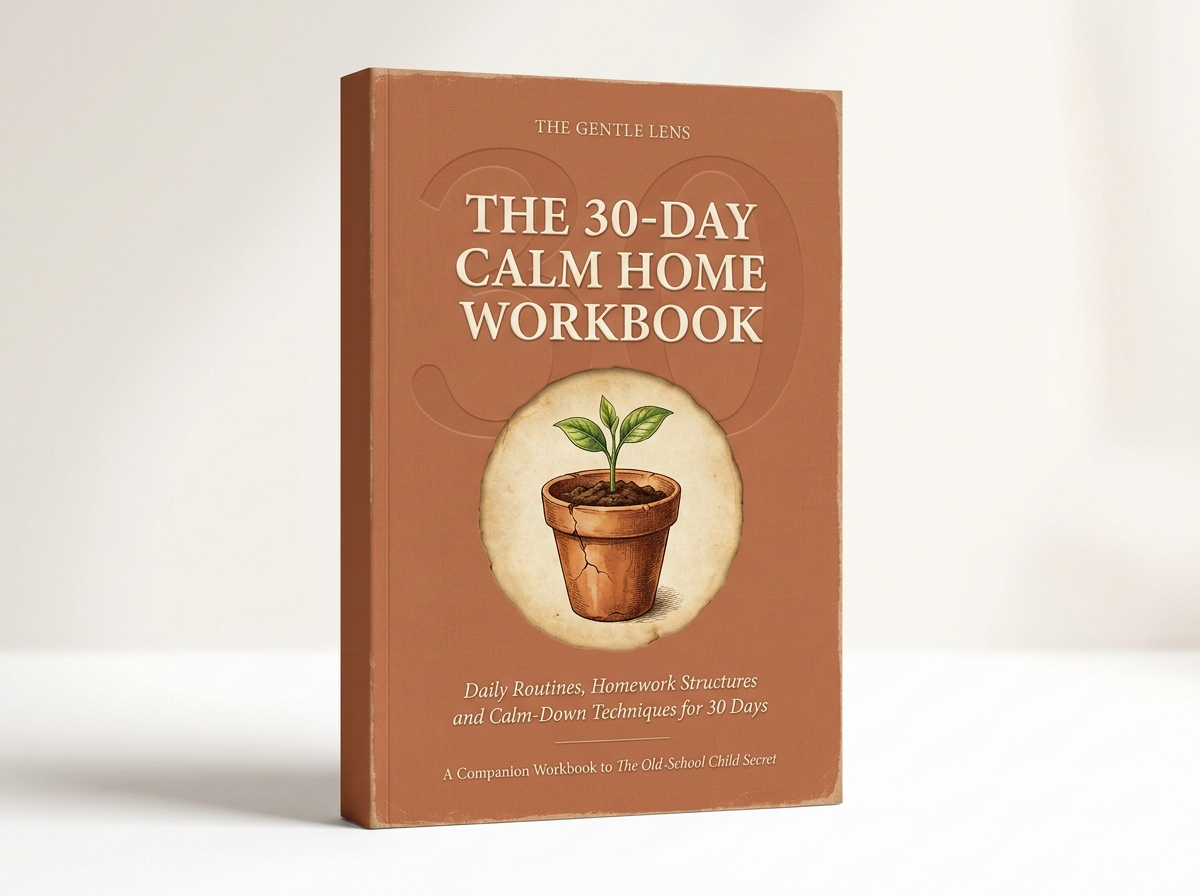
BONUS 2: The 30-Day Calm Home Workbook
Value: N5,000 - Yours FREE
BONUS 1: The School Meeting Survival Kit (Value: N5,000)
The guide every mother needs before she walks into that school office.
- The 5 questions to ask at the next parent-teacher meeting that change the entire conversation
- The exact script for when the teacher says "your child is disrupting the class"
- How to request classroom adjustments without being labelled "that parent"
- A one-page cheat sheet you can read in the car park before you walk in
Your next parent-teacher meeting will feel completely different.
Worth N5,000. Yours FREE today.
BONUS 2: The 30-Day Calm Home Workbook (Value: N5,000)
A day-by-day action plan so you never have to wonder "what do I do today?"
- 30 days of specific activities, homework routines, and bedtime structures
- A morning checklist and evening wind-down routine designed for children who do not switch off easily
- Built-in progress tracker so you can SEE the change happening week by week
- Calm-down techniques for the moments when everything falls apart
By Day 30, homework will no longer be the part of your day you dread.
Worth N5,000. Yours FREE today.
Everything You Are Getting Today

My Promise To You
Step 1: Get the guide today
Step 2: Follow the techniques for 30 days
Step 3: Watch what happens at home and at school
If you follow the guide for 30 days and you see no change in your child's behaviour at home or in school...
Send a message, and every kobo of your N9,800 will be returned to you. No wahala. No questions. No drama.
You literally have nothing to lose and your child's future to gain.
Right Now, You Have A Choice To Make
Keep hiring lesson teachers who teach content when the problem is not content.
Keep reaching for the cane when your child cannot explain what is wrong.
Keep dreading the school's phone number on your screen.
Keep sitting in parent-teacher meetings with your head down.
Keep watching your child believe that he is stupid.
And hope that he "grows out of it."
(He will not grow out of it. He will grow INTO it. And it will shape every year of school that follows.)
Imagine 30 days from now...
Homework is no longer a war. It is a routine.
The teacher calls, but this time with good news.
Your child finishes his work, closes his book, and looks up at you. Not with tears. Not with frustration. With pride.
"Mummy, I did it."
Your mother-in-law notices the change and asks what happened.
You walk into the school gate with your head up.
This is what understanding looks like. And it starts with one guide.
Questions Mothers Ask Before Getting The Guide
One Last Thing Before You Go
I want you to imagine something.
It is 30 days from now. A school afternoon.
Your phone rings. It is the school.
But this time, your stomach does not drop.
Because you already know what kind of call it is going to be.
"Good afternoon, Ma. I just wanted to tell you that your son had a wonderful week. He is making real progress. Whatever you are doing at home, please keep doing it."
You hang up.
And for the first time in years, you breathe. Really breathe. The kind of breath where your whole chest opens and your shoulders drop and you did not even realise you had been holding them.
At home, homework is a routine, not a war. The cane has not been touched in weeks. Your child finishes his work, closes his book, and looks up at you.
"Mummy, I did it."
And you know, with complete certainty, that your child is not stupid. He is not stubborn. He is not a problem.
He was never the problem. He was always the answer. You just needed someone to show you how to read him.
P.S. You have a 30-day money-back guarantee. If you see no change, you get every kobo back. There is genuinely no risk.
P.P.S. The introductory price of N9,800 is temporary. It will increase. If you are reading this page right now, the current price is still available.
P.P.P.S. Every term that passes without understanding is another term your child spends believing he is the problem. Another term of report cards that do not reflect who he really is. Another term of him whispering to himself, "My brain is not working." His brain is working. It just works differently. And this guide will show you exactly how.
The Gentle Lens · A Different Way To See Your Child
Disclaimer: This guide contains educational information about child behaviour and learning differences shared for informational purposes. Individual results may vary. This is not a substitute for professional medical or psychological assessment. If you believe your child may have a learning difference or developmental condition, please consult a qualified professional alongside using this guide. The guide is designed to support your understanding and to be used alongside your child's teachers, doctor, and assessment professionals.